Around a third of all greenhouse gas emissions come from the way we produce food. [1]
About us / Student-led. Europe-wide.
Universities across Europe are going plant-based. Students are making it happen.
We’re a movement of 600+ students at 93 universities in 16 countries, asking for 100% plant-based food on our campus because of the climate and ecological breakdown.
01 / In short
Practice what
you teach.
Our global food system is a leading driver of climate breakdown, biodiversity loss, and the large-scale exploitation of animals. Universities, as centres of research and innovation, are responsible for leading the change. Every day, universities continue to serve products that contradict their own research and, in doing so, legitimise an industry causing immense harm.
We are students organising within our universities to close the gap between what they research and practice. If they won’t act on their own research, why would anyone else?
02 / The problem
We cannot go
on like this.
Our generation is walking a tightrope. The warnings scientists have given us for decades are turning into reality: heatwaves, floods and failed harvests. For years, the people who did least to cause this have been hit first and hardest. Now more people across the Western world are feeling it too. We cannot go on like this.
And this is so much bigger than the climate alone. Our soils are wearing out, biodiversity is collapsing and fresh water is already running short. As young people inheriting this future, we refuse to accept it as normal.
So many of these crises lead back to one place: industrial animal farming and therefore, what we eat. And that can change.
The numbers behind it
Even if we stopped burning fossil fuels tomorrow, emissions from our food system alone would push us past 1.5°C. [2]
Animal products give us less than 1/5th of our calories but use more than 3/4 of the world’s farmland. [3]
Diets built around plant-based food are one of the major opportunities we have to cut emissions. [4]
Sources
- Crippa et al. (2021), Nature Food — food systems and global emissions.
- Clark et al. (2020), Science — food-system emissions and the 1.5°C target.
- Poore & Nemecek (2018), Science — calories, farmland and food’s environmental impacts.
- IPCC (2019), Special Report on Climate Change and Land — plant-based diets as a mitigation opportunity.
03 / The solution
Universities respond to the climate and ecological crisis through a transition to 100% plant-based catering.
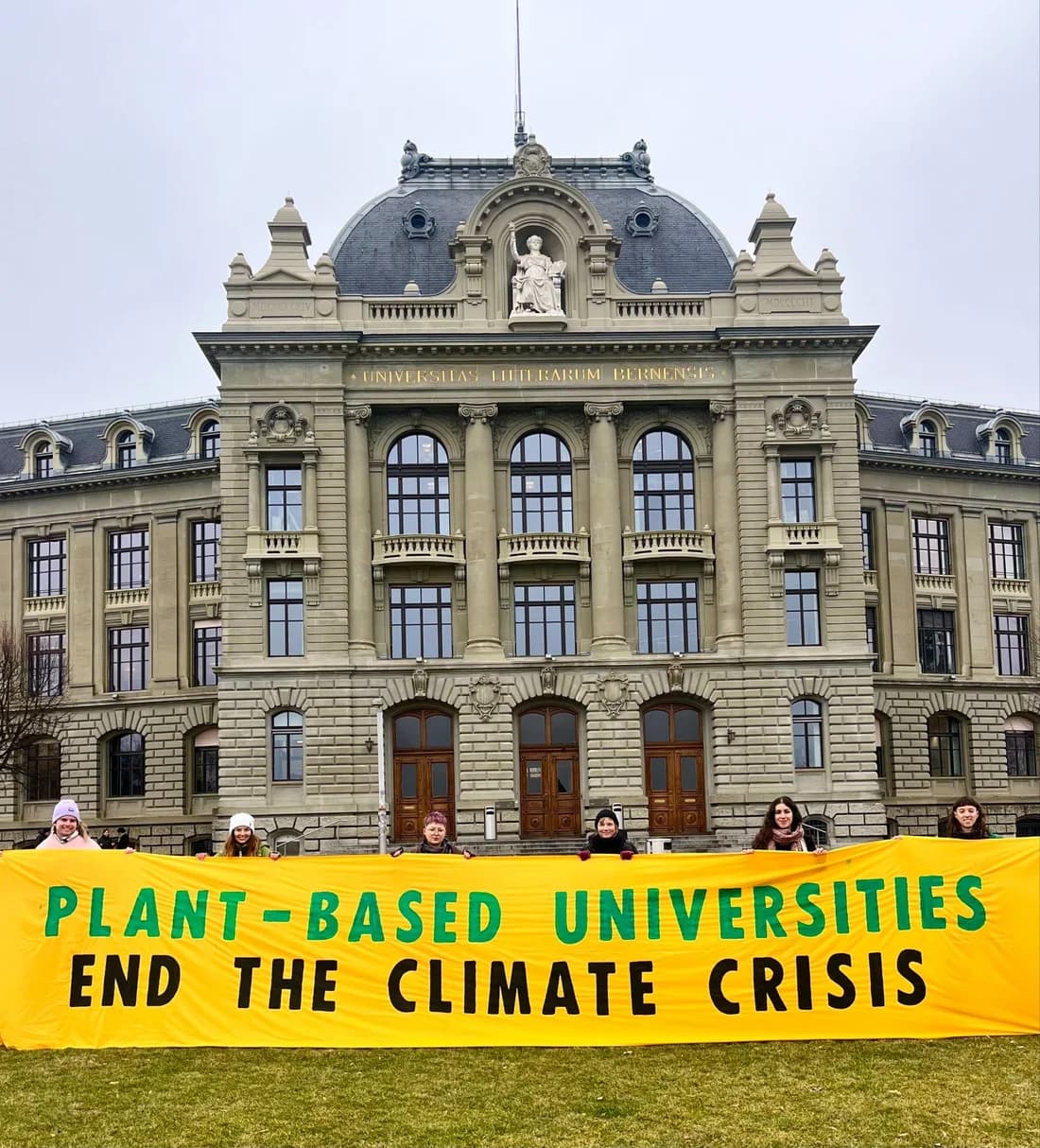
The science is clear, our food system must urgently change, and that won’t happen one person at a time. For decades the burden has been put on individuals to make change for the environment. Yet, so much of what we eat is influenced by what is made available for us and normal.
Institutions such as universities, who serve millions of meals every year, have the possibility to change that default, to align their actions with their research and values.
This would materially reduce emissions, water use, and land pressure as millions of meals switch away from animal products. It would also set a new standard for institutions everywhere on what responsible action looks like in the face of impending crises, and signal that meaningful change is possible.
Why universities?
Put research into practice
Universities should put their own research into practice. The research produced at universities calls for a shift away from meat and dairy as one of the most effective steps to mitigate the climate crisis. Right now, their own canteens keep serving and selling animal products every day. That contradiction undermines the university’s credibility. If the institutions producing this research won’t act on it, who will?
Educate the next generation
Universities educate us, the next generation. They shape the people who will become future leaders and decision makers in every part of society. What students experience as normal during their studies, they carry forward into their lives.
Lead societal change
Universities have a unique responsibility to lead societal change. Universities have always been places where new ideas are tested before the rest of society catches up, and students have often pushed them there, from divesting from apartheid in South Africa to divesting from fossil fuels. In a time of ecological breakdown, the erosion of democracy, and increasingly extreme inequality, universities can and should show what acting on knowledge looks like.
So we have one ask. Practice what you teach: transition to 100% plant-based catering.
04 / We are leading the change
Impossible. Until we did it.
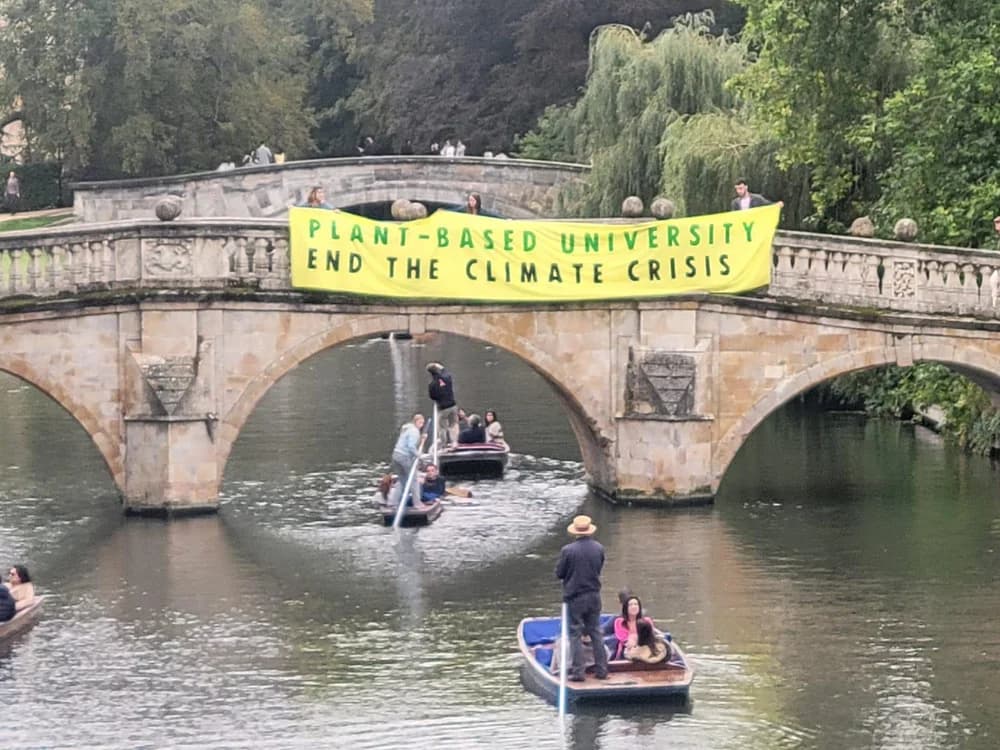
When students first asked for fully plant-based catering at universities, most people said it was not possible. Then it started happening, first on a handful of campuses in the UK and now in 16 countries, one university after another.
93
universities
16
countries
600+
students
32
student union commitments
From three campuses to 93
Now
We are active in 93 universities in 16 countries, and growing every semester. The next win could be yours.
2024–2026
Students all across Europe join and start university campaigns in Switzerland, followed by the Netherlands, Sweden and Belgium, where a wave of wins followed.
2023/24
The first wins outside of the UK. After one year of campaigning the University of Graz goes fully plant-based and the University of Vienna commits to 70% plant-based, 30% vegetarian.
2023
Over 1,000 scientists, professors, and public figures sign an open letter endorsing this transition.
2022–23
Plant-Based Universities spreads. Student unions at eight more UK universities follow, including UCL, Warwick, Birmingham and Cambridge, with a lot of press attention on the way. People asked whether this would work outside of the UK, and students in Graz and Vienna set out to find out.
2022
The first big win. Stirling Students’ Union commits all its catering outlets to fully plant-based, and the story makes national TV and radio.
2021
Students at three UK universities start Plant-Based Universities on their campus by making the link between the climate crisis, animal agriculture and their own canteens impossible to ignore. Within a year, there are teams campaigning at twenty universities for this change.
Featured wins
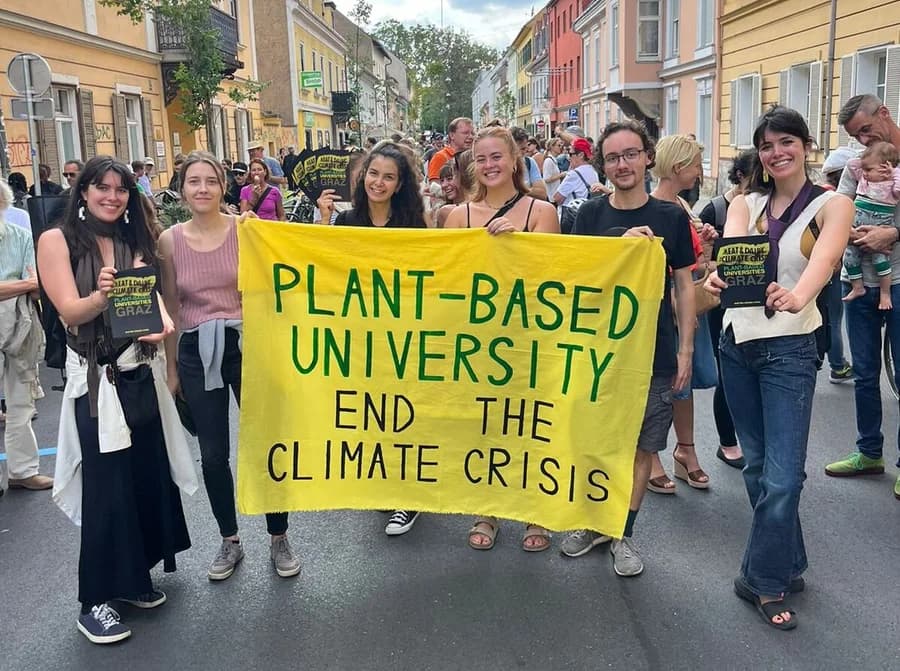
Austria
University of Graz
From no daily vegan dish to a fully plant-based canteen in 12 months.
Fully plant-based
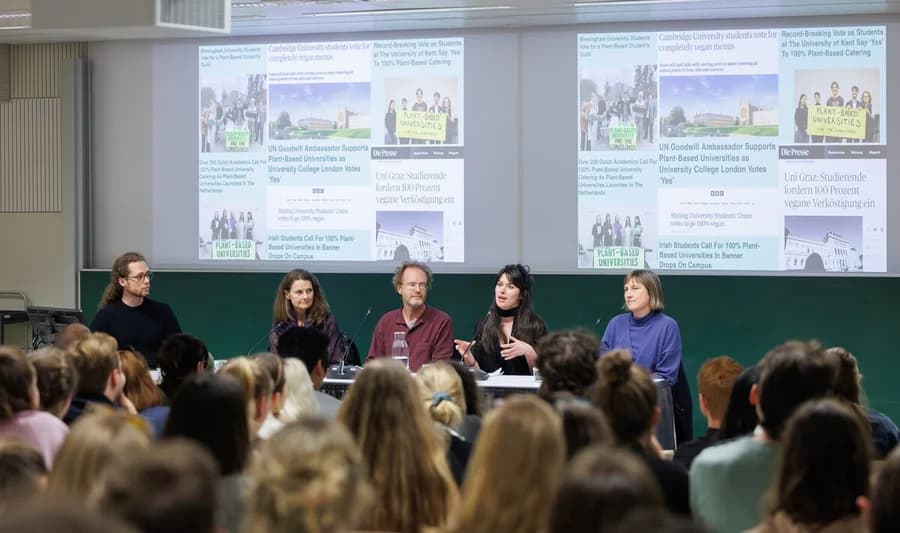
Austria
University of Vienna
The largest university in the German-speaking countries with 90,000 students committed to 70% plant-based, 30% vegetarian catering.
70% plant-based
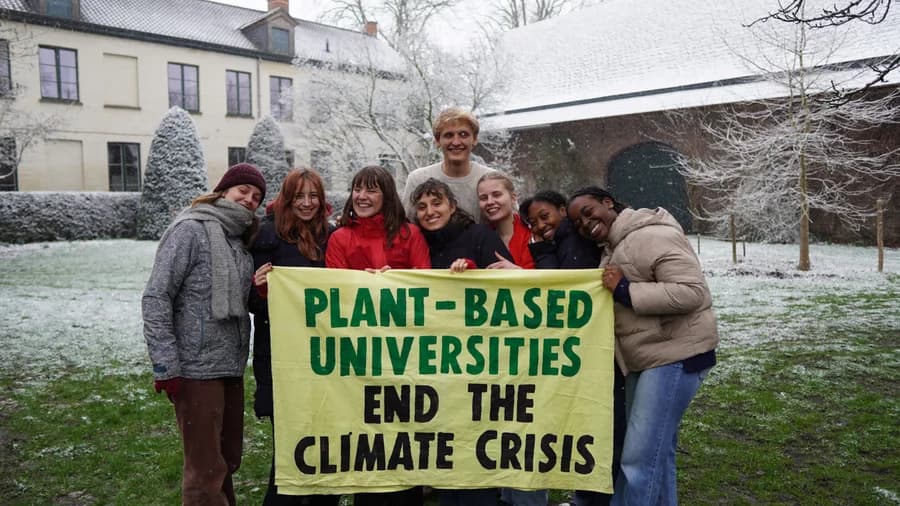
Belgium
Vrije Universiteit Brussel (VUB)
University commits to transition all their canteens to 80% plant-based, three months after students started a campaign there.
80% plant-based
05 / What change looks like
Students step up.
Universities change.
01We take responsibility
Universities are institutions, and as students we are part of them. Instead of waiting for someone else to act, we students take responsibility for our own university. We start the conversation and work together with the universities to make what they serve reflect their own values.
Many of us came to Plant-Based Universities worried about our future and unsure what we could do about it. But we are choosing to step up. We, students, take the initiative at our own university and work with them together to take responsible action in times of the climate crisis.
02We change what people believe is possible
A few years ago, the idea of fully plant-based catering at universities seemed impossible. Now it’s happening, and every university committing to that puts fully plant-based catering more firmly on the table as a serious, credible option. It is now the official position of the national student unions, representing all students in Austria, the UK and Switzerland.
In the last three years, Plant-Based Universities has been mentioned in the press over 1,700 times, with students taking part in more than 40 live TV and radio interviews amplifying our message and shifting understanding of what’s possible.
03We change the menus
Implementing our demand means no animal products served on academic grounds.
That creates immediate, measurable impact: fewer greenhouse gas emissions, less land use, less water use, and no direct participation in animal exploitation.
With millions of meals served in universities every year, each campus that transitions makes a significant difference, and proves that fully plant-based catering is not only necessary, but achievable.
So far, students have switched more than 900,000 meals to fully plant-based.
06 / Our organisation
Student-led.
Supported together.
Who we are as an organisation
Plant-Based Universities is a student-led movement. Students lead the change at their own universities, working together with, rather than against, everyone involved: other students, university decision-makers, caterers, and more.
Everything else in the organisation exists to support those student teams. In our most active countries, full-time coordinators help train teams, and support them to grow. A small international team provides training, resources, and strategy support. This support structure has enabled our rapid growth across Europe.
07 / Join the movement
This is about all of us.
You don’t need experience, and you don’t need to eat plant-based or be a vegan yourself. You just need to care about this change and be ready to stand up for it with others.
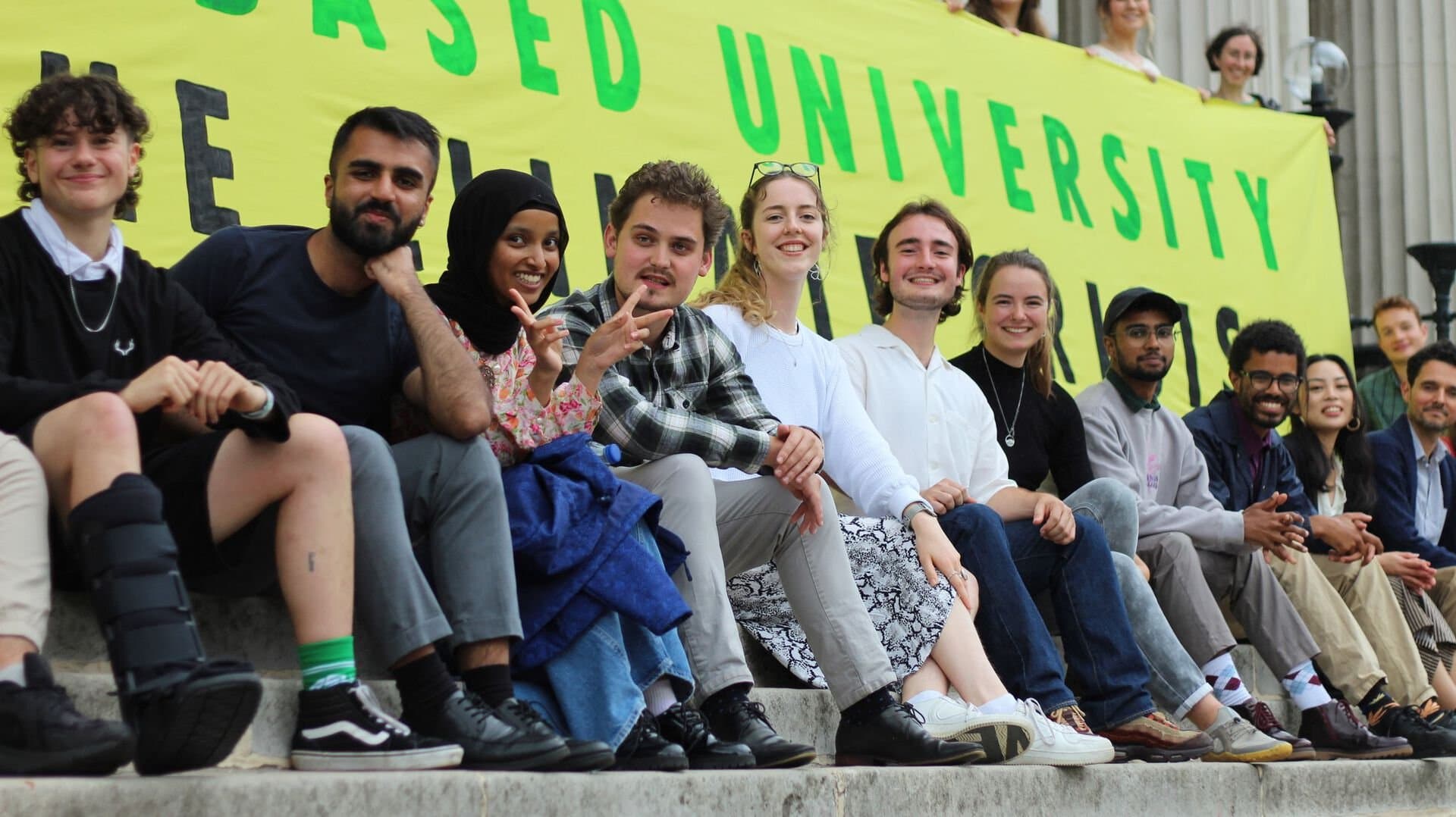
What happens when you sign up
- Someone from our team gets in touch.
- You join a welcome call with other students from your country.
- You join an existing team, or you find some friends to start one together with.
- You take part in a training to make a plan to create change in your university.
- You join a movement of 600+ students in 16 countries, who have each other’s backs, and come together at national and international events over the year.
Not a student?
- Work at a university? Let’s talk about making the switch together.Contact us →
- Professor or researcher? Add your name to the open letter of academics backing the movement →
- Want to support students? Donate →
- Journalist? Press contact and press kit →
Every switch at every university was called impossible until students made it happen. Yours could be next.